


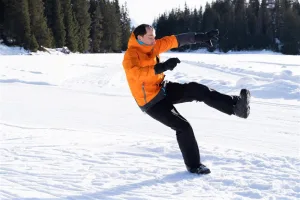
Summary: Slips and falls are a leading cause of winter workplace injuries, but most are preventable. Wearing proper footwear, walking cautiously, and keeping your hands free can reduce your risk significantly. If a fall occurs, knowing how to fall safely and seeking prompt care can help to minimize injury and speed recovery.
When the temperature drops and sidewalks glaze over with ice, one of the biggest hazards we face (especially at work) is the risk of slips and falls. While snow may look picturesque from the office window, it can quickly become dangerous underfoot. Every year, thousands of workers experience a slip-and-fall accident during the winter months, often resulting in strains, sprains, or even serious injuries like a lower-back injury from falling backwards.
The good news? Most winter workplace falls can be prevented with a few simple precautions. Whether you’re walking from your car to the office or working outdoors, taking the right steps can keep you upright, safe, and injury-free.
Start with Prevention: Stay One Step Ahead of Slippery Conditions
Preventing a slip-and-fall accident begins before you ever set foot outside. The right preparation and awareness can make all the difference.
1. Choose Proper Footwear
The right shoes can save you from a serious fall. Opt for insulated boots with thick, non-slip soles made of rubber or neoprene. Tread patterns with deep grooves provide better traction on icy or wet surfaces. Avoid smooth-soled shoes, high heels, or worn-out boots that don’t grip well.
2. Walk Like a Penguin
It might look funny, but walking like a penguin works! Keep steps small, feet pointed outward slightly, and weight distributed evenly. Walk slowly and carefully, especially when transitioning from dry areas to wet or icy ones. Avoid rushing; It’s not worth the risk of a back injury from a fall that could sideline you for weeks.
3. Keep Your Hands Free
Carrying heavy bags or keeping your hands in your pockets can throw off your balance. Instead, keep your hands free to help steady yourself or break a potential fall. If you’re carrying items, use a backpack or shoulder bag so you can keep your arms ready for balance.
4. Pay Attention to Your Path
Black ice can be nearly invisible. Stay alert when walking outdoors or near building entrances where melted snow can refreeze. Use handrails whenever available, especially on stairs and ramps, and avoid shortcuts across untreated areas.
Minimize Injury from a Slip-and-Fall Accident the Smart Way
Even with all the right precautions, falls can still happen. When they do, your body’s instinct is to tense up, but that can make injuries worse. Knowing how to fall correctly can help minimize the damage.
Don’t Try to Catch Yourself with Your Hands
It’s a natural reaction to reach out when falling, but landing on outstretched hands can cause wrist and arm injuries. Instead, try to bend your elbows and knees slightly and aim to fall on softer, fleshy parts of your body such as your side, thighs, or buttocks.
Tuck Your Chin
If you’re falling backward, tuck your chin toward your chest to prevent your head from hitting the ground. Many people sustain a lower-back injury from falling backward; some may even experience a concussion when their head whips back on impact. Protecting your neck and spine is key.
Try to Roll with the Fall
If possible, go with the motion rather than fighting it. Rolling can help distribute the force of impact over a wider area, reducing the risk of a back injury.
Relax as Much as You Can
While easier said than done, staying loose can actually reduce injury severity. A tense body absorbs more shock upon impact. Think of it like this: A stiff tree branch snaps in the wind, but a flexible one bends and bounces back.
Related: Sprains, Strains, and Shin Splints, Oh My! How to Heal Them
After a Slip-and-Fall Accident: What To Do Next
If you’ve experienced a slip-and-fall accident, it’s important to assess your condition before moving. If you are in pain, feel dizzy, or suspect a serious injury, stay where you are and call for help. Common signs of a back injury from a fall include sharp pain, stiffness, numbness, or difficulty standing.
Even if your pain seems minor at first, injuries can worsen over time. It’s always a good idea to get checked out by a medical professional, especially if you suspect a lower back injury from falling backward. Early diagnosis and treatment can make recovery faster and more complete.
How Excelsia Injury Care Can Help
At Excelsia Injury Care, we specialize in diagnosing and treating injuries from falls, accidents, and other workplace incidents. Our integrated team of physicians, chiropractors, and physical therapists works together to create personalized treatment plans tailored to your specific injury and recovery goals.
If you’ve sustained a back injury from a fall or are dealing with persistent pain after a winter slip, we can help with:
- Comprehensive evaluations to identify soft tissue, joint, or spinal injuries
- Physical therapy and rehabilitation to restore mobility, strength, and function
- Pain management strategies designed to reduce discomfort and promote healing
Our goal is to help you return to work, movement, and daily life safely and confidently.
Related: Slip on a Crack? Watch Your Back! Back Injury Evaluation and Treatment
Stay Safe This Winter
Winter can be unpredictable, but your safety doesn’t have to be. By focusing on prevention (proper footwear, careful movement, and situational awareness) you can greatly reduce your risk of a slip and fall accident. And if a fall does happen, remember: stay calm, protect your body, and seek care right away.
At Excelsia Injury Care, we’re here to support your recovery every step of the way. Reach out to our team; we’re ready to help. This winter, walk carefully, stay balanced, and know that expert help is right here if you need it.